Declared vs Effective AI Access: Why robots.txt Is Not Enough
A robots.txt rule describes a published preference, not a guaranteed network path. A crawler can be allowed on paper and still receive a 403, challenge page or timeout from a CDN, WAF or origin server.
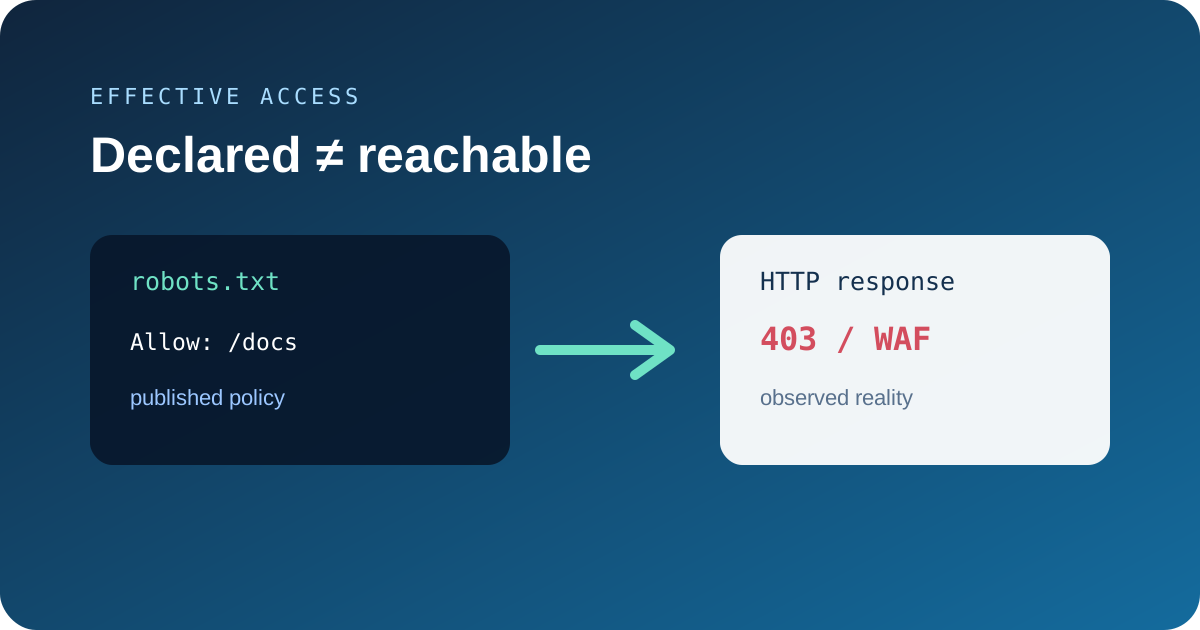
Declared access is the rule visible in robots.txt; effective access is the response a documented crawler can actually receive.
What is the difference?
Declared access is the rule visible in robots.txt; effective access is the response a documented crawler can actually receive.
Keep these signals separate in audits. Check the live robots.txt file, then request representative public URLs and record status codes, redirects, content type and blocking headers. Never infer a successful fetch from an Allow rule alone.
How can teams test it responsibly?
Use a small set of public URLs, respect rate limits and compare the result with server or security logs.
A 403, JavaScript challenge or repeated timeout should be reported as a technical reachability issue, not as proof that a crawler ignored robots.txt. Re-test after CDN, WAF and hosting changes.
What should be published?
Publish the observed date, tested URL class, response category and limitations of the test.
This makes an audit useful to developers and editors without claiming to reproduce every crawler network or private ranking signal.
Practical checklist
Use these steps to turn the article’s principle into a repeatable publishing and measurement habit.
- Record the exact URL, crawler token and date before changing a rule.
- Separate a published directive from an observed HTTP response and from search visibility.
- Link to the relevant official documentation and state what the test cannot prove.
Frequently asked questions
Does Allow guarantee that a bot can crawl?
No. It only states that the published robots.txt policy does not disallow the path.
Should I block crawler IPs first?
No. Start with documented policy and authentication; IP ranges and infrastructure can change.