robots.txt and AI Governance: The 2026 Policy Trend
The 2026 governance trend is operational discipline. A robots.txt file is becoming a published policy surface that must be reviewed when AI products, user-agent tokens or business objectives change.
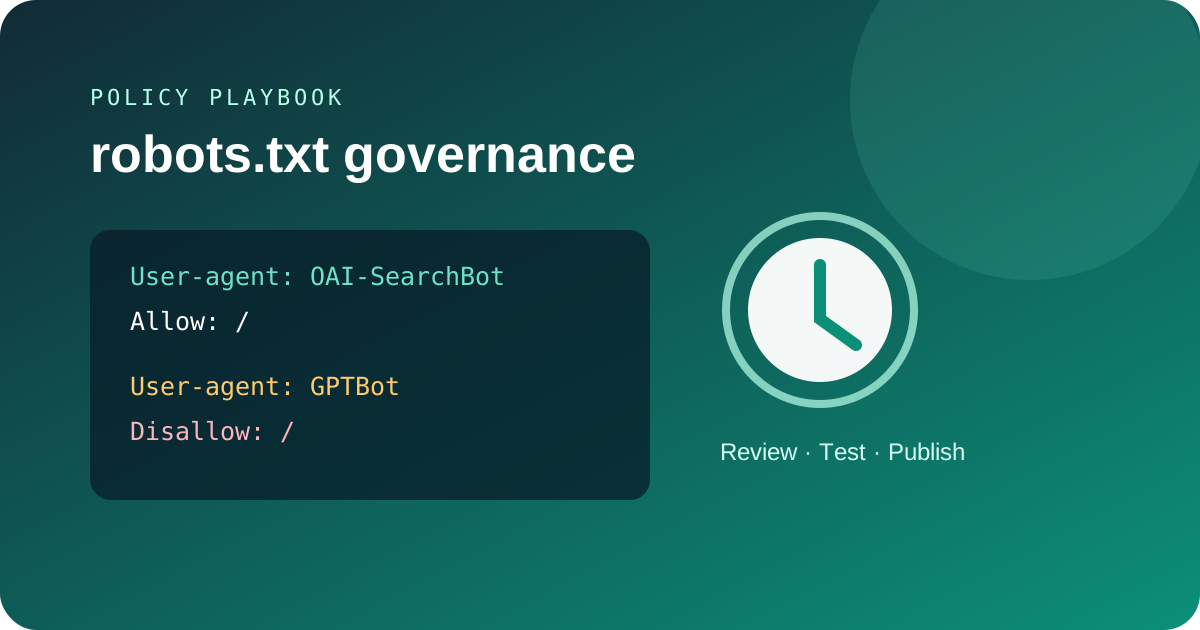
A wildcard rule may unintentionally block useful search discovery or allow a training crawler that the publisher intended to restrict.
Why are blanket rules risky?
A wildcard rule may unintentionally block useful search discovery or allow a training crawler that the publisher intended to restrict.
Create separate groups for documented tokens and keep comments or internal records explaining the business decision. Test the effective rule rather than judging the file visually.
How should changes be managed?
Treat crawler policy like configuration: review, deploy, fetch the live file and verify representative URLs.
CDNs, CMS plugins and security products can rewrite or cache robots.txt. A successful code change is not enough; the public response is the evidence that matters.
Which metrics matter?
Track fetch errors, matched rules, crawl behavior and downstream search visibility separately.
Do not turn a technical allow/block test into an invented authority score. Use reproducible evidence and explain the limits of every measurement.
Practical checklist
Use these steps to turn the article’s principle into a repeatable publishing and measurement habit.
- Record the exact URL, crawler token and date before changing a rule.
- Separate a published directive from an observed HTTP response and from search visibility.
- Link to the relevant official documentation and state what the test cannot prove.
Frequently asked questions
Can robots.txt guarantee compliance?
No. It communicates preferences to crawlers that choose to honor the standard.
Should IP blocking replace robots.txt?
Not for policy expression; crawler IP ranges and infrastructure can change.
How often should policies be reviewed?
Review after major platform, CDN, CMS or crawler-documentation changes.